
Which NDIS Home and Living Support Fits? SIL vs STR vs SDA vs ILO

Imagine it's 11 pm and you're Googling again. Your adult daughter has outgrown the family home and you want to understand what options are out there to support her independence but every page throws new words at you.
Or maybe you're helping a loved one who has managed well for years at home, but whose health has deteriorated. You're worried about them as cooking, showering and getting dressed is getting harder. Living alone is starting to feel unsafe, and you're not sure what support might help.
Or perhaps you're simply exhausted. You (and your usual carers) need a short break so everyone can reset and keep going. A friend mentions 'short term respite, and you're left wondering what that actually means.
If that feels familiar, you're not alone. These are some of the most challenging times, when you know you need more support but not sure how or what options are out there.
To make this less overwhelming, we'll walk through each NDIS home abnd living support at a glance.
We'll also share how this looks like in real life with a story from BCD customer Carol's journey to Supported Independent Living to show you how transitioning into SIL is supported at each step of the way.
IMPORTANT UPDATE: Looking for the latest NDIS changes?
This article explains NDIS Home & Living supports more generally. For the latest announcements and what they may mean for participants, applicants and families, read our updated blog here or visit ndis.gov.au.
NDIS Home & Living Supports
There are different NDIS home and living supports available with funding dependent on your needs and eligibility, in this blog post we'll cover:
Supported Independent Living (SIL) - daily paid support at home (help or supervision with daily tasks).
Short Term Respite (STR) - a planned short break from your usual informal supports.
Specialist Disability Accommodation (SDA) - the specialist home (the building) designed to be more accessible for people with high support needs or extreme functional impairment.
Individualised Living Options (ILO) - exploring different ways to live and designing supports that fit.
First, let's take a look at what these supports are and who they are for:
🏠 Supported Independent Living (SIL)
For some people, the journey to supported independent living happens gradually moving out of the family home, for other's it starts to become a consideration with sudden health changes.
When the level of support needed across the day and overnight increases significantly, that's the place SIL can fit.
This is the part many families relate to in Carol's story. Carol had been living independently for years at home with support, but as her health changed she started feeling more anxious about coping day to day.
Working closely with Carol, her loved ones and her support network, a calm, gentle planned transition into one of BCD's Supported Independent Living Homes shaped around her comfort and support needs.
What it is: SIL is paid personal support, funded by the NDIS. The aim of SIL is to help people with disabilities live as independently as possible while still receiving assistance with daily tasks like personal care, cooking, and household management.
Who it's for: It's for participants with higher support needs who need support across a 24 hour day, including overnight.
It can include things like personal care, meals, routines, medication and medical appointments.
One of the most impactful aspects of Carol's new chapter is the 24/7 support and care she now receives as part of the Supported Independent Living SIL NDIS funding. With round-the-clock assistance from experienced care workers and BCD's in-house Clinical Services and Nursing Team, Carol is never alone in managing her health. (You can read more about Carol's story below)
What the funding covers: It doesn't cover day to day living costs like rent, groceries or utilities.
What the funding doesn't cover: It doesn't fund the cost of the physical house or for home modifications. Other NDIS supports (like SDA - Specialist
To learn more about SIL, you can read our latest guide here, explore our BCD accomodation or call our BCD care team on 1800 275 223 or contact us online through our contact page.
Real lives, real stories at BCD : New Beginnings At Chestnut Cottage
Carol lived independently for years with some support at home. As her health changed, she began to feel more anxious about coping day to day.
After careful planning with Carol, her loved ones and her broader support network, she moved into one of our warm Supported Independent Living homes. The move was paced gently, with attention to both her emotional comfort and practical support needs.
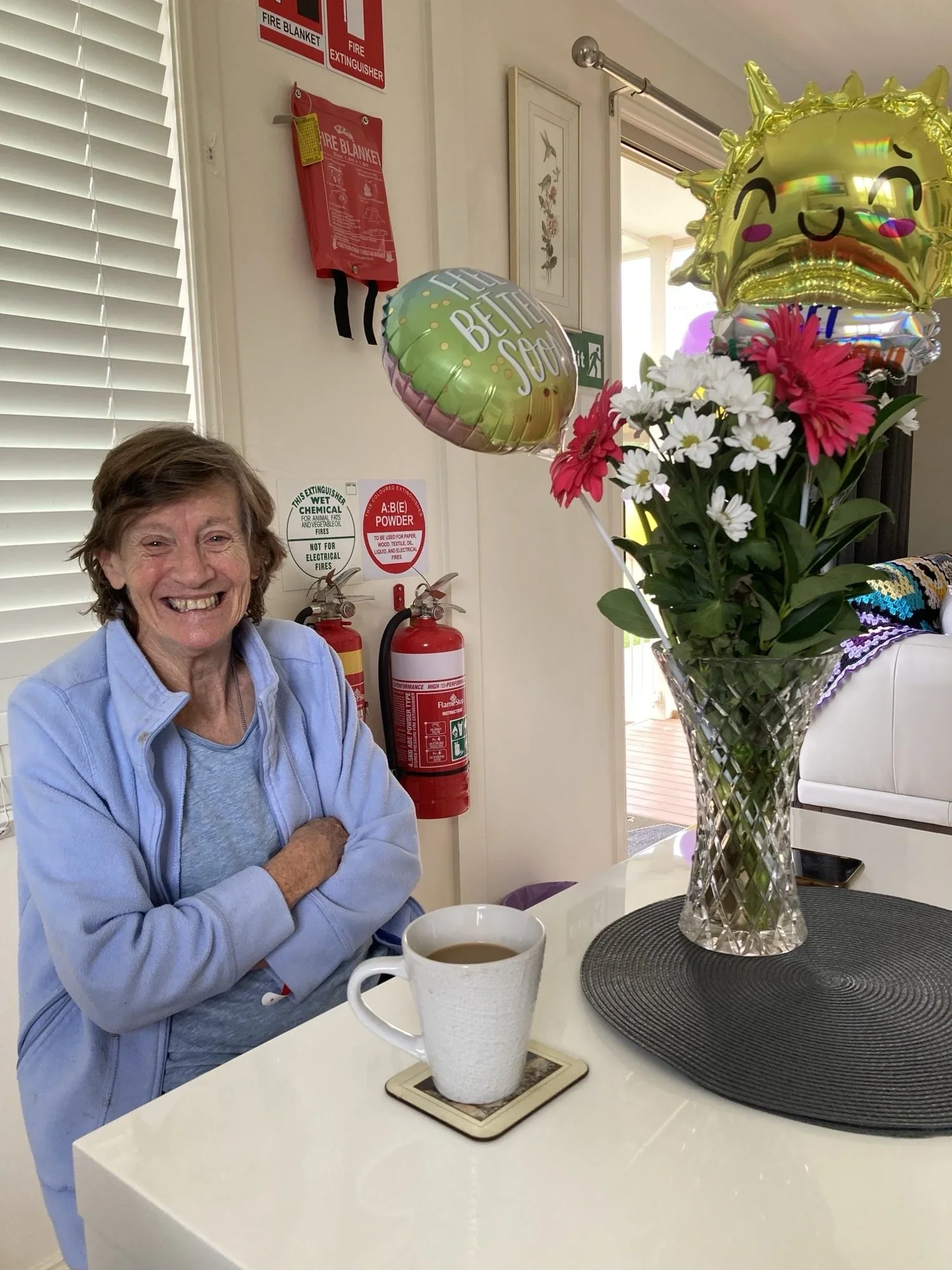
That new beginning came in the form of Chestnut Cottage, one of BCD's warm and welcoming Supported Independent Living (SIL) homes.
With 24/7 SIL support, experienced care workers, and access to our BCD's in-house Clinical Services and Nursing Team, Carol now has consistent care around her and isn't left to manage her health alone.
The nursing team work closely with her to monitor her diabetes, manage medications, and respond promptly to any changes in her condition. Their focus on preventative care catches small issues before they become bigger problems has made a significant difference. Where once hospital visits were frequent and disruptive, now Carol feels more stable, confident, and supported in her day-to-day life.
This proactive and holistic approach means Carol is no longer reacting to health crises, she's staying ahead of them. Having access to tailored, in-house nursing services within her own home will help reduce hospital readmissions and improved her overall quality of life. And beyond the clinical side of things, it's the human connections, the daily chats, shared laughter, and kind gestures that have brought a sense of calm and joy back into Carol's world.
Today, consistent daily support and a calm home environment have helped Carol feel safer, less isolated, and better supported. You can read more of Carol's story here.
If you're exploring SIL, our BCD accomodation homes offer a range of modern, accessible living options.
🛏️ Short Term Respite
Not every situation needs Supported Independent Living. Sometimes the immediate need is for respite with support for the person and their carers.
What it is: STR lets you have time apart from your primary informal supports (family, friends or carers) for at least one night. It gives you support from someone else and allows your usual supporters to have a short break. STR is usually up to 14 days at a time and up to 28 days per year
Who it's for: Participants who live with their primary informal supports (partners, family, friends) or receive significant daily drop in support from them. It can also support children with significant disability needs where respite helps the family keep caring.
Who it's not for: people who live alone without informal supports or those who already receive more than 18 hours of paid support a day. STR isn't funded if you're living in supported independent living or have individualised living options in place.
What the funding covers: standard accommodation (a clean, comfortable place with basic amenities). STR funding covers paid supports to help with everyday activities like getting ready, cooking and cleaning. If you need a support worker to stay overnight, their accommodation can be funded too.
What it doesn't cover: holiday accommodation or travel such as cruises, tickets or entry fees to events and activities, or accommodation and program costs for your informal supports. STR can't be used for day to day living costs like mortgage, rent or utilities.
To learn more about Short Term Respite, check out our dedicated blog guide online or our BCD accommodation homes to explore more.
🏘️ Specialist Disability Accommodation (SDA)
What it is: SDA is housing built for people living with very high support needs or extreme functional impairment. These homes include accessible features so other supports can be provided safely, for example reinforced ceilings for hoists. Some SDA dwellings are shared homes with a few residents, and some are for a single person.
Who it's for: people who need a specially designed home because of very high disability related support needs.
Who it's not for: people whose support needs can be met in mainstream housing with other supports for example by home modifications or using using assistive technology.
What the funding covers: the cost of the building and accessible features.
What it doesn't cover: Day to day living costs such as rent, utilities and groceries. It also doesn't include disability support services, which are funded separately
📝 Individualised Living Options (ILO)
What it is: ILO supports are described as helping participants explore different ways to live and design supports that help them live the way they choose. ILO is a flexible way to design where and how you live. It lets you explore different ways to live ,for example with a host family or a house-mate and then helps to put in place the supports that suit you.
Funding is provided in two stages: stage 1 (exploration and design) helps you work out where you want to live, who you might live with and what support you need; stage 2 is implementing the agreed plan.
Who it's for: ILO might be worth exploring if you:
- are 18+ and looking at home and living options
- need regular support at home (around 6+ hours a day)
- can work towards building skills and planning your future living setup
- may involve family or friends as part of your supports
- don't need 24/7 rostered support or daily registered nursing care
Who it's not for: If you need 24/7 rostered support or daily registered nursing care, there are other home and living options available to you to explore.
ILO does not pay for the house or home modifications, and it does not fund activities outside the home (like work or recreation) It isn't a preset program or group arrangement where you can't choose your house-mates.
What the funding covers: support to explore and design your living arrangement and then put those supports in place Examples include a host arrangement (living with another family), a house mate arrangement, or tailored supports in your own home.
What it doesn't cover: the cost of the house, major modifications or support for activities outside your home.
For the latest information on NDIS home and living supports, visit the NDIS website
At a glance comparison
Support |
Who it is for |
Who it’s not for |
What the funding covers |
What it doesn’t cover |
|---|---|---|---|---|
ILO |
For participants who are 18yrs+ and looking at home and living options, need regular support at home (around 6+ hours a day), can build skills and plan your future living setup, may include family or friends as part of your supports, and don’t need 24/7 rostered support or daily registered nursing care. |
Not for funding housing or major modifications. Not for activities outside the home and not for arrangements where you cannot choose who you live with. |
Exploration and design of a personalised living arrangement and implementation of chosen supports. |
The house or home modifications; activities outside the home. |
SDA |
Participants with extreme functional impairment or very high support needs requiring specialist housing. |
Participants whose needs can be met with assistive technology or home modifications. |
The physical home, bricks and mortar of specialist accommodation with accessible features. |
Does not fund support services (e.g., personal care or SIL) or rent and day-to-day living costs. |
(STR) |
Participants who live with primary informal supports or receive significant daily drop-in support. |
Participants living alone without drop-in informal supports. Those with more than 18 hours of paid support per day, participants already funded for SIL or ILO. |
Standard accommodation and paid support to help with daily activities, may cover a support worker’s overnight accommodation. |
Does not fund holiday accommodation or travel, event tickets or activities, accommodation for your informal support, day-to-day living costs. |
(SIL) |
Participants with higher support needs who need significant help throughout the day and night. |
People who only need intermittent support. |
Support for daily activities such as personal care, meal preparation, cleaning, developing routines, behaviour support, social skills, medication and medical appointments. |
Rent, groceries, utilities and other day-to-day costs, budgeting or holiday expenses, supports funded by health or justice systems. |
Information accurate as at Tuesday 3rd February, 2026 - visit NDIS website for the latest information at https://www.ndis.gov.au/participants/home-and-living
Common misconceptions
Now that we know what these NDIS supports cover, let's move onto some of the common misconceptions around these.
"SIL pays for rent"
Reality: SIL doesn't include day to day living costs like rent, groceries or utilities.
"STR is basically a holiday"
Reality: STR isn't for holidays (including holiday accommodation or airfares). It provides a place for respite and to work towards your goals with support.
"SDA includes support workers in the house"
Reality: SDA doesn't include the services or supports delivered in the home. It is for the physical building itself.
"STR is funded no matter what, as long as we're burnt out"
Reality: The NDIS guideline sets decision points, including living with (or getting daily drop-in support from) informal supports. For the latest information and guidelines on NDIS Home and Living supports, visit the NDIS website.
Practical Tips & Questions To Ask
The next step is working out what actually fits your situation. The easiest way to do that is to bring it back to everyday life and ask yourself what support is needed at home, when it's needed, and what's getting in the way right now (support, housing, or both).
The questions below can help you prepare for planning conversations and make sure the discussion stays focused. Practical tips and questions to ask yourself
What does a good day look like at home and what support would make that possible?
How much help is needed across a 24-hour day (including overnight)?
Who provides the informal support now, and what would help make that sustainable?
Is the main barrier support, housing features, or both?
Got A Question?
We've collected some of the most common questions we hear below and on our FAQs page.
Can Supported Independent Living (SIL) be funded if I live on my own?
Yes, the NDIS SIL guidelines state you can get SIL if you live with other participants or on your own. It also notes there may be other home and living supports that suit you better, depending on your situation.
What does SIL pay for?
SIL is paid support (help or supervision) with daily tasks at home, and can include a range of day to day supports like personal care, routines and medication.
What doesn't SIL pay for?
SIL doesn't include rent, groceries or utilities and it doesn't cover some supports that sit with other systems (for example, paid personal supports while you're admitted to hospital).
How long can Short Term Respite (STR) last?
According to the NDIS STR guideline say it's up to 14 days at a time, and up to 28 days per year.
What can STR include?
STR may include standard accommodation and supports to help with everyday activities. If a support worker needs to stay overnight to provide the support you need, their accommodation can be funded too.
Is STR meant for holidays or travel?
No, the NDIS guidelines say STR isn't for holidays (including holiday accommodation or airfares). It provides a place for you to take a short break from your usual home and work towards your goals.
What does SDA funding cover?
SDA is the specialist housing. It doesn't include the services or supports delivered in the home, and people living in SDA still pay rent and day-to-day living costs.
Can STR be funded if I already have SIL or ILO?
No, the NDIS guidelines state it won't be funded if you're living in a supported independent living arrangement, or if you have funding for individualised living options supports.
For the latest information on NDIS home and living supports, visit the NDIS website. (Information accurate as at Tuesday 3rd February, 2026).
Need Help?
If you're feeling overwhelmed, you don't have to work this out alone. A BCD team member can walk you through what to do if you are thinking about home and living supports or want to learn more about the supports we provide. Call 1800 275 223 to speak to our BCD care team today or contact us online.
Our Respite, Short-term Accommodation and Supported Independent Living give families a much-needed break while helping live more independently and feel connected to a supportive community. Read more about our flexible accommodation options.
Sources:
Visit the NDIS website for the most up to date information: https://www.ndis.gov.au/
NDIS Guidelines: https://ourguidelines.ndis.gov.au/supports-you-can-access-menu/home-and-living-supports/supported-independent-living
https://www.ndis.gov.au/participants/home-and-living/supported-independent-living-participants
https://www.ndis.gov.au/participants/home-and-living/supported-independent-living-participants
https://www.ndis.gov.au/participants/home-and-living/specialist-disability-accommodation-explained
Disclaimer
The information provided in this blog post is for informational purposes only and should not be considered as legal, financial, or professional advice. While we strive to ensure the accuracy of the content, we encourage you to visit the relevant government websites for the most up-to-date and official information.